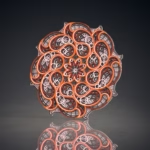
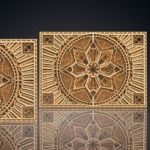

Layered laser cutting technology has emerged as a transformative force across various industries, demonstrating its versatility and efficiency. In the automotive sector, for instance, manufacturers utilize this cutting-edge process to produce intricate components with precision. The ability to cut through multiple layers of materials enables the creation of complex geometries essential for lightweight designs, enhancing fuel efficiency and performance.
In the aerospace industry, the application of layered laser cutting is equally significant. This technology allows engineers to fabricate components that are not only lightweight but also robust, which is critical for spacecraft and aircraft parts. Projects involving the production of turbine blades or structural elements benefit immensely from the precision that laser cutting offers, ensuring optimal performance while maintaining safety standards.
Metal fabrication is another area where layered laser cutting shines. Companies involved in processing sheet metal use this technology to streamline their operations and reduce waste. The precision of laser cutting results in less scrap material being generated, leading to more environmentally friendly practices. Furthermore, the capacity to layer materials broadens the scope of products, encompassing custom enclosures and intricate decorative elements.
Innovations powered by layered laser cutting span numerous fields, reinforcing its significance in modern manufacturing. For example, bespoke designs for art installations, architecture, and consumer goods benefit from the technology’s capability to execute detailed patterns and textures. This versatility translates to higher customization levels, responding quickly to market demands and consumer preferences.
Overall, the diverse applications of layered laser cutting not only enhance production efficiency but also foster creativity and innovation across various sectors, which will lead to future advancements in engineering and design.
Limitations and Challenges of Layered Laser Cutting

Layered laser cutting has revolutionized various industries, but it is not without its limitations and challenges. One of the primary concerns is the thickness of materials that can be effectively processed. While layered laser cutting excels with thin materials, thicker substrates often pose difficulties. The laser’s ability to penetrate multiple layers of dense materials diminishes, resulting in incomplete cuts or lower-quality edges. Thus, manufacturers must consider the optimal thickness specifications when utilizing this technique.
Another critical challenge arises from heat-affected zones (HAZ). The intensity of the laser beam can generate significant heat, which alters the structural integrity of the nearby material. This thermal distortion can lead to warping or melting around the cut edges, adversely impacting the precision that layered laser cutting is known for. Furthermore, HAZ can introduce imperfections that may require additional finishing processes, complicate the workflow and increase lead times.
Cost is yet another factor that plays a substantial role in the applicability of layered laser cutting. The initial investment in laser cutting technology and maintenance can be considerable. Additionally, the operational costs associated with energy consumption and consumables, such as lenses and gases, can accumulate over time. Businesses must perform a cost-benefit analysis to determine if the benefits of layered laser cutting outweigh the financial challenges.
To address these limitations, ongoing technological advancements are focusing on improving laser systems’ efficiency and precision. Solutions such as optimizing the laser source or implementing advanced cooling systems may mitigate excessive heat generation and enhance the cutting quality for thicker materials. By addressing these challenges, innovations in layered laser cutting continue to evolve, making it a more versatile and accessible process for a broader range of applications.