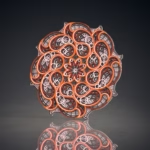
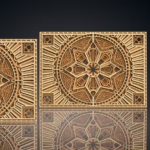

Layered laser cutting technology offers numerous advantages over traditional cutting methods, making it an increasingly popular choice in various industries. One significant benefit is the increased precision achieved through this technique. Laser cutting utilizes a focused beam of light that can create intricate designs with minimal tolerances. Unlike conventional methods that may produce rough edges or variations in dimensions, laser cutting ensures consistent results, which is particularly important for applications requiring high standards of accuracy.
Another advantage is the reduction in material waste. Traditional cutting processes often result in a significant amount of scrap material due to the limitations in cutting shapes and patterns. However, with layered laser cutting, the process is highly optimized, allowing for tighter nesting of parts and more efficient utilization of raw materials. This not only translates to cost savings but also contributes to more sustainable manufacturing practices by minimizing waste generation.
Layered laser cutting is also renowned for its ability to cut complex shapes that would be challenging or impossible to achieve using traditional techniques. This includes detailed engravings or customized designs tailored to specific project requirements. The flexibility of the laser allows for adjustments on the fly, catering to evolving design needs without the necessity for extensive retooling.
Moreover, another significant advantage is the versatility of materials processed through layered laser cutting. This technique can effectively cut a wide array of materials, including metals, plastics, wood, and textiles. This adaptability makes laser cutting an ideal solution for various industries, from aerospace to fashion, where innovative designs and materials are paramount.
Real-world examples highlight the efficiency improvements afforded by this technology. For instance, companies in the automotive sector have reported accelerated production timelines and enhanced accuracy in the fabrication of components, showcasing the practical benefits of adopting layered laser cutting methodologies.
Layered laser cutting technology
Has emerged as a transformative force across various industries, demonstrating its versatility and efficiency. In the automotive sector, for instance, manufacturers utilize this cutting-edge process to produce intricate components with precision. The ability to cut through multiple layers of materials enables the creation of complex geometries essential for lightweight designs, enhancing fuel efficiency and performance.
In the aerospace industry, the application of layered laser cutting is equally significant. This technology allows engineers to fabricate components that are not only lightweight but also robust, which is critical for spacecraft and aircraft parts. Projects involving the production of turbine blades or structural elements benefit immensely from the precision that laser cutting offers, ensuring optimal performance while maintaining safety standards.
Metal fabrication is another area where layered laser cutting shines. Companies involved in processing sheet metal use this technology to streamline their operations and reduce waste. The precision of laser cutting results in less scrap material being generated, leading to more environmentally friendly practices. Furthermore, the capacity to layer materials broadens the scope of products, encompassing custom enclosures and intricate decorative elements.
Innovations powered by layered laser cutting span numerous fields, reinforcing its significance in modern manufacturing. For example, bespoke designs for art installations, architecture, and consumer goods benefit from the technology’s capability to execute detailed patterns and textures. This versatility translates to higher customization levels, enabling a quick response to market demands and consumer preferences.
In general, using layered laser cutting in different areas not only makes production faster but also encourages new ideas and creativity, which can lead to future improvements in engineering and design.